

CLINIC OPERATIONS · PRACTICAL GUIDE
AI in the Clinic: What an Assistant Should and Should Not Do
A practical guide to responsible AI in therapy software: what an assistant may prepare, what must stay with the clinician, consent, logging and limits.

The short version
AI may support a clinician by organising information for review. It should not diagnose, decide treatment or contact clients without a person-controlled process. 7DaysCare’s Session Companion is in development, not a live feature.
- Start with one narrow, reviewable task.
- Keep the source record and human decision visible.
- Confirm development status and data handling before a pilot.
7DaysCare Clinic Guides · Clinical systems and AI
Who this guide is for: Therapists and clinical leads who are curious about AI but cautious about its use.
Reading time: about 11 minutes.
A clinic can consider AI without treating every new function as suitable for clinical work. Begin with a narrow task, keep human judgement in control and be clear about what is available today.
AI is coming to therapy software either way
Artificial intelligence is appearing in tools that clinics already use. Some services can summarise text, suggest a draft or organise information. That does not make every use suitable for clinical work. A clinic needs to decide what an assistant may see, what it may produce and who checks the result before it affects a record or a conversation.
Start with the task, not the technology. “Use AI” is not a purpose. “Prepare a short pre-session summary from the prior notes, measures and goals for the clinician to review” is a specific task that can be evaluated. The team can ask whether the summary is accurate, whether it saves a step, what information it needs and what the clinician should do if it is incomplete.
Keep the distinction between assistance and decision-making clear. An assistant can organise information or suggest a draft for a person to examine. The clinician remains responsible for clinical judgement, assessment and decisions. The tool should not diagnose, decide a treatment or speak to a client without an explicit, agreed process. In a therapy setting, a confident-sounding output can still be wrong or miss the context that matters.
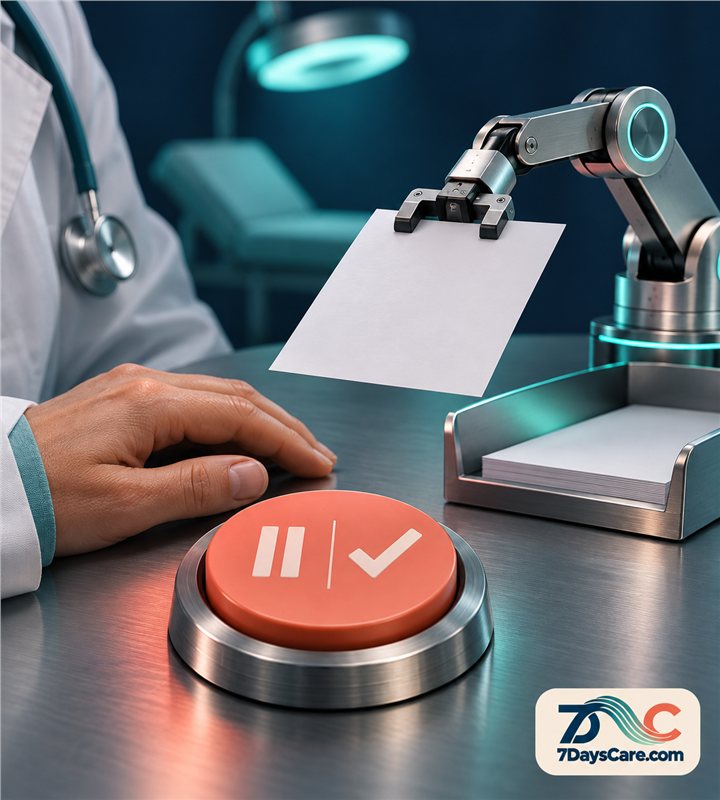
Talk about the limits before introducing a pilot. Staff should know that the assistant may omit details, misunderstand a phrase or present a suggestion that does not fit the client. They need a clear way to reject, correct or report an output. The clinic should also decide whether AI use is appropriate for a particular service, record type or case.
A careful position is neither automatic adoption nor blanket dismissal. It is to define a narrow task, set boundaries, test with appropriate oversight and stop if the risks cannot be managed.
What an assistant may do
A useful assistant performs a limited supporting task that a person can review.
For example, before a session it might prepare a summary of the prior sessions, the measures completed and the current goals.
The therapist can then open the original record, check the summary and decide what is relevant for the conversation.
The summary should help someone find information, not replace the information itself.
It can point to themes or dates for review, but the clinician needs access to the underlying notes and scores. A summary may be incomplete. The interface should make it easy to distinguish the assistant’s generated text from the source record and from the clinician’s own documentation.
Other possible tasks need their own assessment.
Drafting a routine administrative message may be different from drafting clinical content. Sorting incoming information is different from making a triage decision. A clinic should describe what input the tool receives, who sees the output, whether it is retained and how the person checks it. Do not assume that a feature suitable for one task is suitable for another.
Evaluate a proposed assistant with ordinary scenarios and edge cases.
Include a blank record, a missed questionnaire, a changed goal and a correction to a previous note. Ask what the tool produces when information is absent or conflicts. A safe design should show uncertainty and missing context rather than filling gaps with plausible-sounding detail.
Keep the person in control of the final action. The therapist should actively review, edit or discard an output. If the product adds generated text to a record, the workflow should make clear who accepted it and when. This creates a more understandable record of how the information was used.
What it must never do
An AI assistant must not be presented as the clinician. It should not make a diagnosis, decide whether someone is at risk, choose a treatment or determine that a person is ready to end care. Those tasks require professional judgement, context and a relationship with the client. A software output is not a substitute for that responsibility.
It should not quietly send a message to a client as if a clinician wrote it. A message can affect trust and may be misunderstood without the context of a conversation. If an assistant prepares a draft, a person should review it and decide whether to send it. The clinic should make the authorship and approval steps clear to staff.
Do not let a summary hide the source. If a therapist cannot inspect the underlying record, they cannot check what the summary includes or leaves out. Keep a route back to the original information and make it straightforward to correct the record if a source item is wrong.
Do not use AI outputs as a shortcut for supervision or performance management. A generated summary cannot tell a manager whether a clinician provided appropriate care. Likewise, a score or phrase generated from a note should not be treated as a fact about the client without review.
Finally, do not let an assistant access more information than the task needs. The clinic should identify the minimum information required, who can run the tool, what is recorded about each use and how long that information remains available. If the provider cannot explain those boundaries, pause the use until the clinic has enough information to decide.
Consent and logging
Consent is not a single checkbox that settles every question about AI.
The clinic should explain the proposed use in language clients can understand, including what information may be processed, what the assistant does and what remains a human decision.
The clinic’s professional and legal advisers can help decide what notices or choices are required for its services.
Make the choice meaningful.
If a client does not want an assistant involved in preparing a summary, the clinic should know what the alternative process is and who will complete it. Staff need to understand how to record the preference and how to avoid running the tool for that person. The process should not pressure a client to agree in order to receive care.
Logging helps the clinic reconstruct what happened.
Record what the assistant was asked to do, what information it used, what it returned and what the clinician did with the output.
The exact details depend on the design, but the purpose is to make the workflow understandable after the fact.
A log should not become a substitute for checking the underlying record.
Limit who can view AI-generated content and its logs.
A manager may need to review system use, while a clinician needs access to the records relevant to care. Not everyone needs the same view. Include the use in staff training so that people know what is recorded and where they can report a concern.
Before a pilot, decide how the clinic will respond to a wrong or harmful output. Staff should know how to stop the workflow, correct the record and notify the person responsible for the service. A pilot without a response plan is not a controlled experiment.
How 7DaysCare helps
7DaysCare’s AI Session Companion is in development. The first stage is planned within six months, according to the product brief. It is not a live feature that clinics can use today. Any discussion with the team should make that status clear and confirm the current plan before a clinic relies on a delivery date.
The intended direction is a provider-neutral assistant that can help prepare information for a clinician, while logging what was asked and what was done. Provider-neutral means the design is not tied to one named AI provider. It does not by itself answer every question about where data is processed, which model is used or what contractual terms apply. Those details should be checked for the eventual implementation.
A clinic evaluating the idea can start by writing one narrow use case. For example: “Before a scheduled session, prepare a reviewable summary of earlier sessions, completed measures and current goals for the clinician.” The clinical lead can specify what information should be included, what should be excluded and how a clinician should verify the source. The team can then ask how consent, access and logging would work.
For a hypothetical practice, a small design group might include a therapist, a clinical lead and an information-governance contact. They could review sample outputs with fictional data, list the errors that would matter and decide what the person must check before using the summary. They could also define a manual alternative for clients or records outside the pilot.
The limit is important: the assistant is in development, and the planned capability should not be described as available. No AI system should be described as making a diagnosis or replacing a clinician. Before a future pilot, confirm the actual functions, data flows, human review steps and contractual terms.
Explore the 7DaysCare feature list to compare the workflows, review pricing, or talk with the team about your clinic’s requirements. You can also explore the platform.

The limits of summaries
A summary compresses information, and compression creates risk. It can omit a detail because it appears small, combine two separate events or make a tentative note sound certain. A therapist who reads only the summary may miss a change in the client’s words or a qualification in the original record.
Use summaries as an index for review. The clinician should be able to open the source item, check the date and understand whether the generated wording is a direct quotation, a paraphrase or a suggestion. If the design does not make that distinction visible, it can be difficult to know what belongs in the clinical record.
Test for missing information as well as incorrect information. Does the assistant say when there are no recent measures? Does it distinguish a goal that was discussed from one that was agreed? Does it avoid filling in a blank? The tool should be allowed to say that it lacks enough information. Silence or uncertainty is safer than an invented detail.
A summary can also inherit errors from the record it reads. If the source note has a wrong date or the wrong goal, the assistant may reproduce the mistake. The clinic needs a way to correct source records under its usual procedures and consider whether generated summaries should be refreshed or marked as based on an earlier version.
Set a practical review habit. Before a session, the clinician can compare the summary with the most relevant source entries and correct or discard it. After a session, the clinician documents the work using the clinic’s normal standard. The assistant does not become an alternative record simply because its text is convenient.
Where we are: in development
A planned feature is not a promise that every use case will be available on a particular date. Product work can change as the team tests needs, risks and technical choices. A clinic should ask what is confirmed, what is still being explored and when it should check again.
If a provider-neutral assistant is part of a future roadmap, ask what “provider-neutral” means in practice. Can the clinic choose where processing takes place? Which model versions might be used? What happens to prompts and outputs? Are requests and actions logged? Can the clinic set access rules? What happens when the assistant is unavailable? These questions help turn a broad product idea into something the clinic can evaluate.
Ask how the feature will be tested and who will be involved. Clinical staff should help assess whether the workflow is useful and whether the output is understandable. Governance and technical colleagues should review data flow, access, retention and incident handling. The clinic should not rely on a marketing description to answer implementation questions.
Until a feature is available and its terms are clear, continue using the clinic’s existing clinical and administrative processes. Do not put real client information into a public AI service as a substitute for a feature that is still being developed. The clinic should use only tools it has assessed and approved for the information involved.
A useful roadmap conversation ends with written next steps: the proposed scope, what is not included, what evidence the clinic needs and when the team will follow up. That keeps interest in AI connected to an accountable process.
Tell us what you need
Clinics can help shape future tools by describing specific work rather than asking for “more AI”. A useful example includes the role, the moment in the working day, the information needed, the output that would help and the decision a person would still make.
For instance, a clinician might explain that before a review they currently open several records to confirm the client’s goals and most recent measures. They can describe what a short, linked summary might include and which details must remain visible in the original record. The team can then discuss how to check accuracy and what should happen when the source information conflicts.
Include the exceptions. What if a client has several active episodes of care? What if one questionnaire is missing? What if a note was corrected? What if the clinician does not want an AI summary for a particular session? A good product discussion makes these cases visible before a workflow is designed.
Do not send personal health information in a general feedback message. Use fictional examples or the provider’s approved channel for any sensitive information. A clinic can explain the shape of a workflow without sharing an identifiable record.
A clear request helps the product team understand the task and helps the clinic decide whether a future function would be appropriate. It also leaves room to say that a feature is not suitable. Technology should serve a defined clinical process, with a person accountable for the final decision.
Your checklist
- ☐ Define one narrow task before evaluating an AI feature.
- ☐ State what information the assistant may use and what it must not access.
- ☐ Keep the source record available beside every generated summary.
- ☐ Require a clinician to review, correct or discard generated content.
- ☐ Explain the proposed use to clients and agree an alternative process.
- ☐ Log what was requested and what the assistant returned.
- ☐ Decide how to report, correct and investigate a harmful output.
- ☐ Confirm whether a feature is available or still in development.
Ask the team to review the list before any pilot. If a key answer is missing, write down who will obtain it and what evidence is needed. A careful pause is a valid result when the clinic cannot yet explain the workflow or its risks.
Frequently asked questions
Can AI prepare a therapy session summary?
A future assistant may be able to prepare information from prior sessions, measures and goals for a clinician to review. The clinician would still need to check the sources and decide what is relevant. Confirm the actual product functions and data handling before using any feature with real records.
Can an AI assistant make a diagnosis?
This guide does not recommend that use. A diagnosis and treatment decision require professional judgement and context. An AI assistant should not be described as diagnosing or replacing a clinician. If a proposed tool appears to make clinical decisions, the clinic should pause and review the design and responsibilities.
Is the 7DaysCare AI Session Companion available?
No. The product brief describes it as in development, with a first stage planned within six months. That is a roadmap statement, not an available feature or a guaranteed delivery date. Ask the team to confirm the current development status and scope.
What should a clinic ask before an AI pilot?
Ask what information the tool uses, who can access it, what gets logged, how long inputs and outputs are retained and how a clinician reviews the result. Also decide how clients are informed, how a person can decline and how the clinic will correct an error.