


The short version
Make the next measurement part of the workflow. Give it a due point, an owner and a clear follow-up path, then track whether eligible episodes have the measures they need.
- Define coverage before comparing results.
- Use a respectful reminder and review schedule.
- Make missing follow-ups visible to the right team.
A clinic can introduce outcome measures, train its team and record an excellent baseline score—then still have too little follow-up data to understand how care is progressing. The gap is often not the questionnaire. It is the missing second ask. A measure becomes useful when the next completion is scheduled, assigned and followed through.
For a clinical lead, this changes the question from “How many scores did we record?” to “For how many eligible episodes do we have the measurements we planned to collect?” That is measurement coverage: the share of eligible care episodes with the required measures recorded at the right points in the care pathway.
The missing step is asking again
Most clinics know how to collect an intake score. The first measure may be part of registration, assessment or the first appointment. The next one is harder. A patient may forget, the clinician may be running late, the link may arrive after the appointment, or no one may own the follow-up task.
The result is a familiar pattern: a strong set of baseline data, followed by a thinner and less consistent record of what happened next. Teams may have many completed questionnaires overall, but still lack paired or repeated measures for the people they intended to monitor.
This is an operational problem. A reminder that is nobody’s responsibility is not a process. A measure that has no due date is easy to overlook. If the software stores scores but does not create the next task, staff are left to remember the follow-up themselves.
Routine outcome monitoring should fit the clinic’s model of care. The selected measure and collection frequency should be chosen by qualified clinical leadership for the population and service. The operational system then needs to help the team carry out that plan consistently.
Measure coverage, not just completion
A raw completion count can make performance look better than it is. If one clinic completes many intake measures but few follow-ups, the total may conceal the gap.
Coverage makes the denominator visible. A clinic might define it as:
Measurement coverage = eligible care episodes with the required measure recorded ÷ eligible care episodes due for that measure × 100
The definition matters. Agree which episodes are eligible, which measure is expected, and when it becomes due. Decide how to handle episodes that end before a follow-up is appropriate, patients who decline, transfers, duplicate records and other exceptions. Show these as documented exclusions or reasons—not as silent omissions.
Coverage does not tell the clinical story by itself. It does not say whether a patient is improving, whether a measure was appropriate, or why someone did not complete it. It tells the team whether the planned measurement process is happening often enough to interpret the data responsibly.
That distinction helps leaders ask better questions. If coverage is low, the first response should be to investigate the workflow: Was the measure scheduled? Was the invitation sent? Could the patient access it? Did the clinician have time to discuss it? The answer may point to a process change, not a staff performance issue.
What coverage looks like in an ordinary week

Imagine that the clinic has agreed a follow-up point for a particular care pathway. At the weekly review, the clinical lead opens a list of the episodes that reached that point. The list includes people who completed the measure, people who have not responded and people whose care plan changed.
The important first step is to keep those groups visible. If the clinic looks only at completed questionnaires, everyone who did not respond disappears from the picture. A chart can then look tidy while the underlying measurement process remains incomplete.
For each eligible episode, ask three simple questions: Was the measure due? Was it completed within the agreed window? If it was not completed, do we know why?
Keep the time window consistent. A questionnaire returned several weeks late may still be useful to the clinician, but it should not quietly be treated as an on-time measure for an earlier appointment. Store the completion date and use it to explain where the result belongs.
It also helps to separate two views. Episode coverage asks how many eligible episodes have the measurements required at the chosen review point. Request completion asks how many individual questionnaire requests were completed. Both can help the team, but they answer different questions.
Suppose one person receives several requests while another never receives the planned follow-up. A request total alone may hide the second person. Looking at the care episode brings the missing follow-up back into view.
The clinic does not need a complicated scorecard to start. It needs a reliable list of eligible episodes, a clear due point and a recorded status. Add more detail only when it helps someone decide what to do next.
Give every measurement status a plain meaning
“Pending” can mean many things. The questionnaire may not have been sent. A link may have failed. The person may have opened it and chosen to return later. Staff may be waiting for a clinician to confirm whether the measure is still appropriate.
Use status labels that describe what has actually happened. For example: scheduled, sent, completed, overdue, declined or paused for review. Keep the reasons behind a status accessible to the people who need them.
Avoid turning an unanswered request into a completed result. A missing score is missing information. Recording a reason can explain the gap, but it does not fill the gap with a clinical measurement.
When an appointment moves, the measurement task needs attention too. Decide whether its due date should move with the appointment or remain tied to a planned review interval. That decision should follow the clinic’s measurement policy, with exceptions available when the care plan requires them.
These small rules prevent a common source of confusion: the calendar says one thing, the questionnaire queue says another, and each team assumes the other has dealt with it.
Build measurement into the appointment journey
The second ask should be created when the first one is recorded. If a baseline measure is completed at assessment, the system can use the care plan or clinic protocol to set the next due point. If measurement is planned around appointments, the next due date can be linked to the next appointment. If it is planned by elapsed time, the system can calculate that date and place it on the work list.
A complete workflow needs to do more than send a form. It should:
Know what is due.
Connect the measure to the relevant care episode and the schedule agreed by the clinic.
Assign responsibility.
Make clear whether the patient, clinician or administrative team takes the next step.
Record the outcome.
Distinguish completed, declined, not appropriate, unable to contact and overdue.
Bring the result into the conversation.
Make the latest score easy for the clinician to review alongside prior measures.
Create the next due point.
A completed measure should move the process forward, not end the tracking sequence.
For example, a clinic using PHQ-9 and GAD-7 tracking software should be able to see the planned measures for an episode and which ones are outstanding. The software should not choose measures or interpret results in place of a clinician. Its job is to make the agreed process visible and reduce the chance that a follow-up disappears between appointments.
Use a respectful follow-up cadence
A chase schedule needs to be specific enough for staff to use and flexible enough to respect the person’s care plan and communication preferences. Here is an operational example, not a clinical rule:
At the point the measure becomes due:
Make the questionnaire available through the agreed channel and show the due item in the clinic’s workflow.
After 24 hours:
If it remains incomplete, send one brief reminder, provided the patient has agreed to receive it that way.
After 48 hours:
Send a second and final reminder, or create a staff task if the clinic’s policy calls for personal follow-up.
After 72 hours:
Mark it overdue and assign a review task. Staff can check for a technical problem, ask whether the timing is suitable, or record a reason for non-completion.
At the next appointment:
Give the clinician a discreet prompt to review the measurement status with the patient and agree what should happen next.
Some clinics may need a shorter window; others may use a different collection schedule. Clinical leadership should set the cadence for the service. The important part is that every due measure has a defined next action and that reminders stop when the patient completes the measure, declines, opts out or the episode changes.
Repeated reminders can feel intrusive. Make messages neutral, explain what the measure is for, offer a simple way to ask for help, and avoid wording that pressures a person to report a particular result. Do not send more information than the channel or recipient needs.
Make missed measures visible and actionable
A useful dashboard should show work the team can act on today. Consider views for:
- measures due soon;
- measures completed and ready for clinical review;
- overdue measures awaiting a reminder or staff action;
- measures declined or paused;
- episodes with no follow-up scheduled;
- coverage by service, care pathway or period.
Use these views to find process patterns. Are follow-up tasks being created consistently? Do reminders fail for a particular contact method? Does coverage change when appointments are rescheduled? Are some services using different rules without realizing it?
Breakdowns can support learning, but they need context. Compare like with like and avoid treating a small number as a league table. A low coverage figure may reflect a data-entry problem, a workflow design issue or a clinically appropriate exception. The dashboard should help the team investigate rather than assign blame.
A measure is most useful when its place in the conversation is clear. The clinician should be able to see when it was completed, how it relates to earlier measures and whether the result needs follow-up. The number alone is not a substitute for clinical judgement or a discussion with the patient.
Walk through one missed follow-up from beginning to end
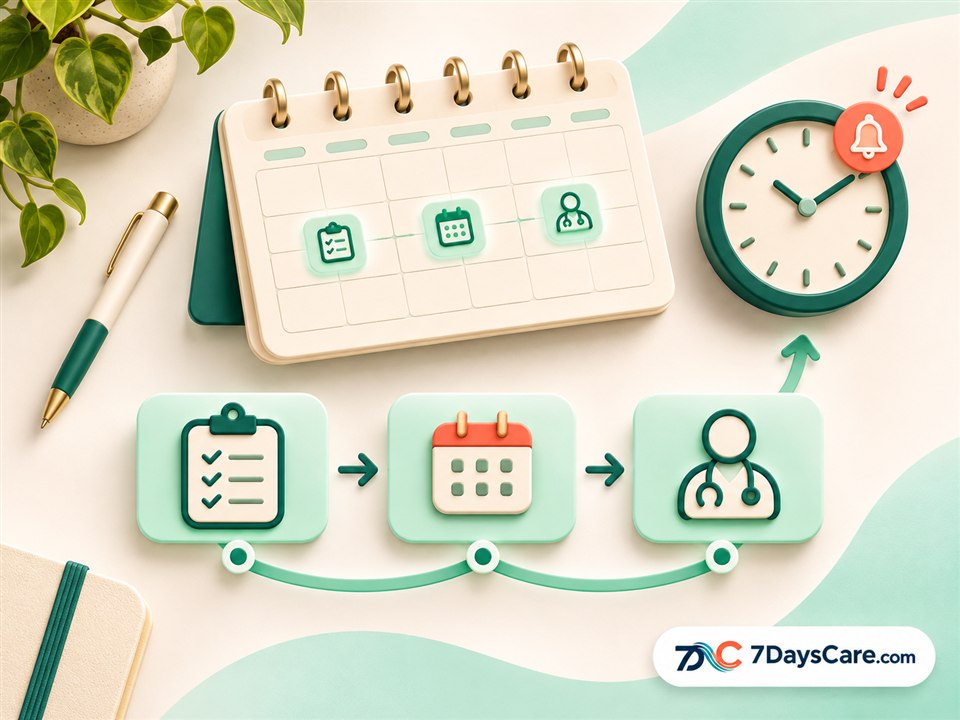
A useful way to review the process is to follow a single missed measure without blaming anyone. Start at the point it became due and look at the record of what happened next.
Was there a valid contact method? Was the invitation actually sent? Did the clinic receive a delivery failure? Was the task still open after an appointment was cancelled? Could staff tell whether the patient had already declined?
If a person asks for help, make the route simple. They may need an accessible format, an explanation of the request or a different agreed method of completion. Staff should know who can provide that help and when to involve the clinician.
At the next appointment, the clinician can ask about the missing measure in a way that leaves room for an honest answer. The person may not have understood the request, may have had difficulty accessing it or may not want to complete it. Those are different situations and should not all become the same overdue flag.
Once the team has resolved the task, record the next step. That might be completion, a documented decline, a revised due date or a clinical review of the measurement plan. A task should not remain open indefinitely simply because nobody knows how to close it.
The purpose of this walkthrough is to discover where the process becomes unclear. Fixing one handoff can be more useful than sending another round of reminders to everyone.
Start with a small operational pilot
Choose one service or care pathway and map its measurement process from first appointment to planned review. Write down the selected measure, the points when it is due, who owns each step, what reminder policy applies and how exceptions are recorded.
Then measure the current process for a defined period. Count eligible episodes and the ones with the planned follow-up recorded. Review a sample of missed measures with staff to understand what happened. Avoid starting with a target that teams cannot explain; first establish that the denominator and the workflow are reliable.
In the pilot, track both coverage and the practical work needed to achieve it. How many measures were due? How many were completed? How many reminders were sent? How many required staff intervention? Did the clinician have the information at the appointment? Did patients report confusion or difficulty?
After the pilot, adjust the schedule, messages and ownership rules. Keep the process simple enough to sustain. If the clinic expands to another service, confirm that the measure and cadence fit that pathway instead of copying the first workflow automatically.
Make the weekly review short and useful
Give one person responsibility for reviewing the measurement work list at an agreed interval. In a small clinic, that may be the practice manager working with the clinical lead. In a larger service, responsibility may sit with a named team.
The review can follow a simple order: episodes with no follow-up scheduled, requests with delivery problems, overdue measures needing a decision, and completed measures awaiting the appropriate review.
Do not discuss sensitive questionnaire answers in an administrative meeting simply because the task appears on a list. Staff should see the information needed for their role. A reminder queue and a clinical review screen serve different purposes.
End the review with named actions. “Someone should chase this” is easy to forget. “The assigned administrator will check the contact route today” gives the task an owner and a next step.
Over time, compare the same coverage definition across comparable periods. If the figure changes, look at both the care pathway and the workflow before drawing a conclusion. A useful number should help explain the service, rather than create pressure to remove difficult cases from the denominator.
Frequently asked questions
What does measurement coverage mean in therapy practice?
It is the proportion of eligible care episodes with the planned measures recorded at the points the clinic defined. The clinic should document its denominator and exceptions so that coverage is interpretable.
How often should a clinic collect PHQ-9 or GAD-7?
There is no single schedule that fits every service. The measure and frequency should follow clinical leadership, the care model and applicable service requirements. The software should make that plan schedulable.
Is a reminder enough to improve follow-up?
A reminder helps only if the clinic knows what is due, who owns the next step and what happens when the measure remains incomplete. The workflow needs an escalation or review step.
Should every patient receive the same questionnaire?
Not necessarily. Measure selection should be appropriate to the person and the service. Software should support the clinic’s clinical rules rather than make that decision on its own.
What should staff do when a patient declines?
Record the decision in a respectful, consistent way and follow the clinic’s policy. Do not keep sending reminders after a person has declined or opted out.
Does a higher coverage rate prove that care is effective?
No. Coverage describes whether planned measurement data is available. It does not establish effectiveness or explain an individual’s progress.
The second ask is part of the measurement
An intake score starts a record. A scheduled follow-up helps complete the picture. When the next measure has a due date, an owner, a respectful reminder path and a clear place in the clinical workflow, the team can see whether routine outcome monitoring is happening as intended.
Start by measuring coverage for one pathway. Then fix the handoffs that make the second ask easy to miss. A well-designed clinic system should help the team schedule, follow up and review—not just store a score.
Build a workflow around your clinic
Explore 7DaysCare features and our platform for clinics and organizations. Bring your requirements to a conversation about the setup your team needs.